



Organismal Dynamics
Mitochondrial signalling crosstalk in the regulation of ageing
Dra Marta Artal Sanz
Principal Investigator
Summary
The manipulation of mitochondrial activity profoundly affects the lifespan of diverse organisms and mitochondria play a prominent role in age-associated human disorders. However, the cellular mechanisms regulating mitochondrial activity and the molecular basis of mitochondrial dysfunction in ageing are poorly understood. Moreover, it remains to be reconciled the observed age-related decline of mitochondrial function with the fact that reducing mitochondrial electron transport chain (ETC) activity promotes longevity across phyla. To date, there is no clear mechanistic explanation for the observed increased longevity of mitochondrial mutants.
The most relevant genetic pathway regulating ageing is the insulin/IGF-1 signalling (IIS) pathway. It is generally believed that mitochondrial dysfunctions exert its effect on lifespan independently of the IIS pathway. However, the mitochondrial PHB complex influences cellular metabolism and mitochondrial biogenesis, affecting ageing in opposite ways in wild-type animals and IIS-defective C. elegans mutants. The striking opposite effect of prohibitin on longevity under different conditions offers a unique opportunity to understand how mitochondrial function relates with the cellular signalling status to regulate longevity. Integration of cellular signalling inputs to fine-tune cellular metabolism towards maximal survival is the molecular basis of a better ageing.
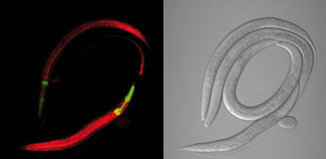
Our aim is to shed light on the intricate communication between mitochondria and cell-signalling networks in the regulation of ageing using the nematode C. elegans. Because the pathways regulating ageing are evolutionarily conserved, research in short-lived model systems that are amenable to genetic dissection will be beneficial to human health.
Five relevant publications
Lab members & collaborators
Lab members
Principal investigator
Dr. Marta Artal Sanz
+34 954 978 323 (office)
+34 954 978 072 (lab)
+34 954 348 920 (fax)
martsan@upo.es
Postdocs
Dr. Artur Pedro Duarte Reis Bastos Lorenco, apreilou@upo.es
Dr. Maria Mercedes Perez Jiménez, mmperjim@upo.es
Dr. Francisco Javier García Rodríguez, fjgarrod1@upo.es
PhDs
Annmary Paul Erinjeri, aperi@upo.es
Blanca Hernando Rodríguez, bherrod@alumno.upo
Research assistant
Maria Jesus Rodriguez Palero, mjrodpal@upo.es
Collaborators
Dr. Nicholas Stroustrup (CRG, Barcelona)
Dr. José Eduardo Gomes (Université de Bordeaux, France)
Dr. Marian Walhout (University of Massachusetts Medical School, Worcester, MA)