



Scientific-Technical Facilities
Cell Culture Facility
1. Service definition
The CABD Cell Culture Facility provides technical and scientific support to research groups in the development of experimental procedures involving primary human and mouse cell cultures, established cell lines, and three-dimensional (3D) cellular models.
The service provides a range of specialized facilities for conventional cell culture, as well as for the development, automation, and analysis of stem cell-derived 3D models, including organoids, embryoids, and other complex in vitro models.
The Service is composed of the following infrastructure:
a. P2 Cell Culture Room
The P2 Cell Culture Room is intended for work with primary human and mouse cell cultures and established cell lines. It also supports transfection procedures and genetic modification using viral vectors, in accordance with the relevant authorizations and established procedures.
The room is equipped with the necessary facilities for the generation, maintenance, and manipulation of cell cultures.
b. White Room for 3D Culture — Room 129
The White Room (Room 129) is specifically dedicated to the development of three-dimensional (3D) models derived from human and mouse stem cells, including iPSC and hESC cultures for the generation of organoids, embryoids, and other complex 3D models.
The room provides controlled environmental conditions and is equipped for the culture and maintenance of stem cell-derived 3D models.
The White Room is not intended for conventional 2D cell culture, cellular reprogramming, transgenesis, or stem cell derivation. The use of primary cells, explants derived from animal models, or organoids generated from primary cultures is not permitted.
c. Automated liquid handling and screening platform –Room 136
The Automated liquid handling and screening platform (Room 136) supports the automation of cell culture, sample handling, image acquisition, and analysis workflows, with a particular focus on 3D cell culture and organoid applications. The platform is also available for 2D and other cell-based applications where automated culture, imaging, analysis, or screening workflows are required. The platform is available for projects involving human or mouse iPSCs and embryonic stem (ES) cells.
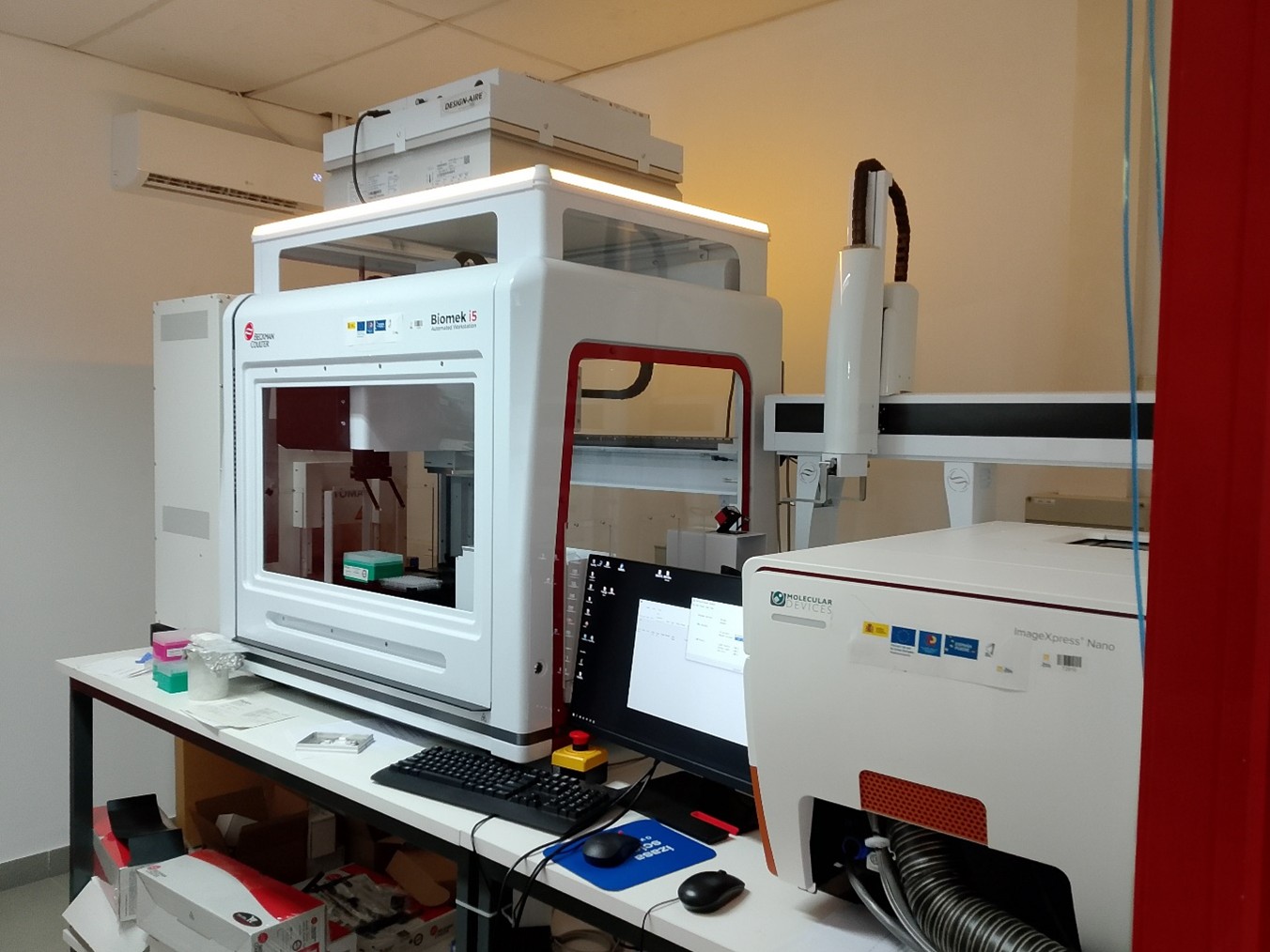
The platform integrates a Cytomat CO₂ incubator, a Biomek i5 automated liquid handling system (Beckman Coulter), and an ImageXpress Nano automated imaging system (Molecular Devices).
This infrastructure enables automated and scalable workflows using 96- and 384-well plates, among others, including organoid growth and viability studies, reporter-line assays, and drug screening.
d. Automated Microscopy Platform — CellDiscoverer 7
The ZEISS CellDiscoverer 7 is a fully automated inverted microscopy system for the acquisition and analysis of live-cell images. It provides control of temperature, CO₂, and O₂, as well as automated image acquisition over extended periods of time.
The system enables the monitoring and quantification of a range of cellular processes, including phagocytosis, apoptosis, chemotaxis, migration, invasion, and cytotoxicity, as well as stem cell monitoring and the assessment of transfection and cloning efficiency.
2. Offered Services
- Access control and registration of authorized users.
- User training and technical advice.
- Advice on the design and development of cell culture and 3D model experiments.
- Development and updating of facility operating procedures and supervision of their compliance.
- Equipment management, reservations, and scheduling of usage.
- Preventive maintenance, cleaning, and equipment monitoring.
- Technical support for 3D culture protocols, organoid generation, and 3D analysis.
- Support for automation, analysis, and screening using the Biomek–Cytomat–ImageXpress platform.
3. Personnel and contact
Scientific responsible: José Antonio Sánchez Alcázar
Technical responsible (P2 Room, CellDiscoverer): Corín Díaz Ramos
Tel.: +34 954 977 432
E-mail: cdiaram@upo.es
Technical responsible (White Room and Automation Platform): Jelena Raspopovic
Tel.: +34 954 349 197
E-mail: jras@upo.es
General assistant: Macarena Lopez Mayorga
Tel.: +34 954 977 432
E-mail: mlopmay@upo.es
4. Equipment
P2 Room
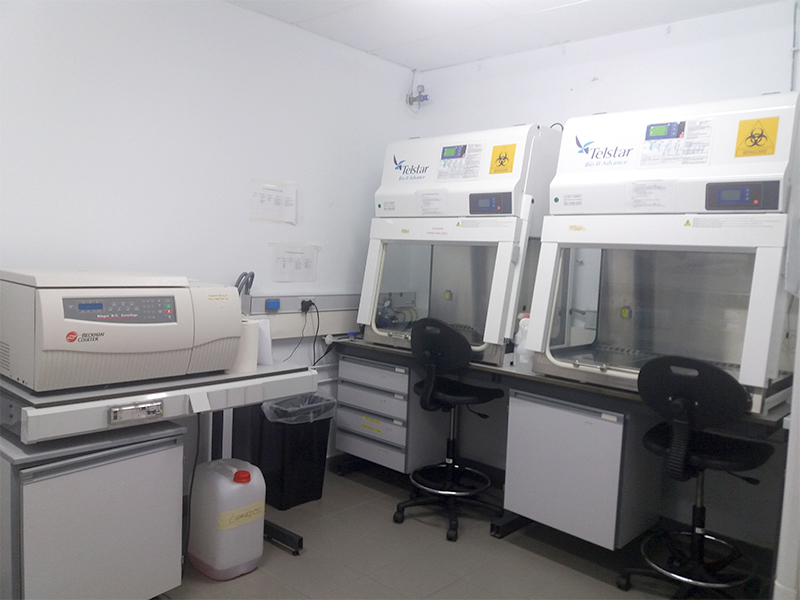
1. Two biological safety cabinets type II:
Bio II advance 3 of Telstar, one of which is exclusively for work with viruses.
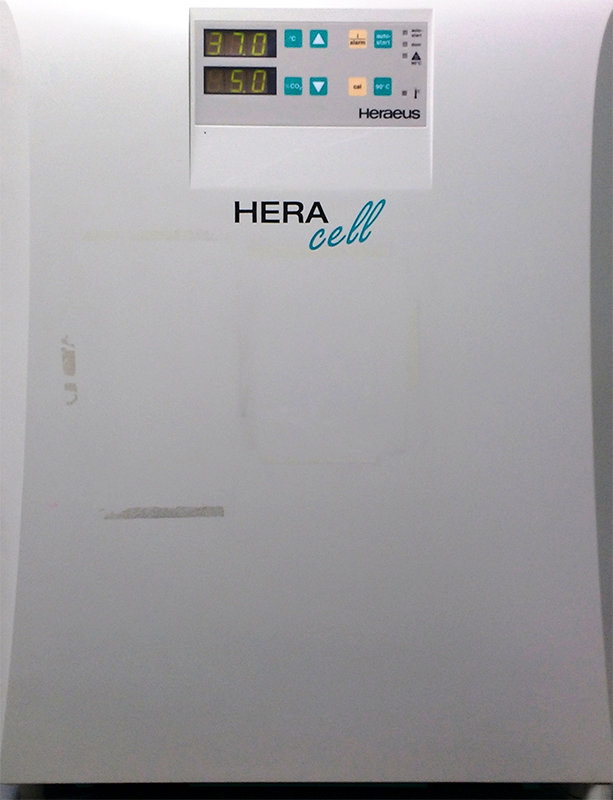
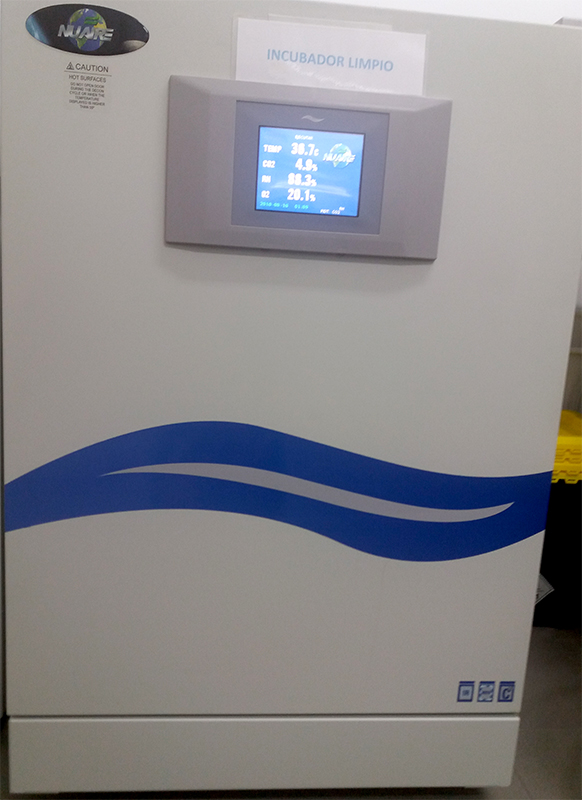
2. Two cell culture incubators (CO2):
It is used as a quarantine incubator
CO2 Incubator Nuaire NU58416
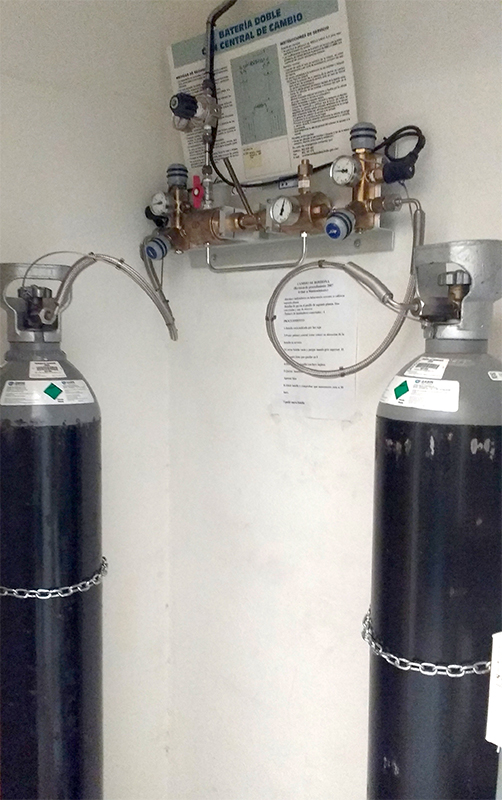
3. CO2 installation:
The equipment of the incubators is complemented by a CO2 installation
that ensures the constant supply of CO2 to the incubators, making an automatic change of the bottles.
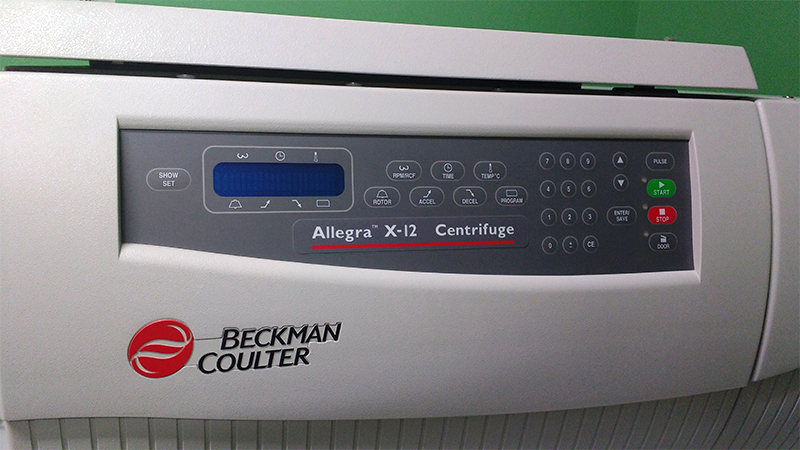
4. Tabletop centrifuge multitasking – Allegra X-12 (BECKMAN COULTER): maximum speed 10.200 rpm. Maximum capacity 3.000 ml
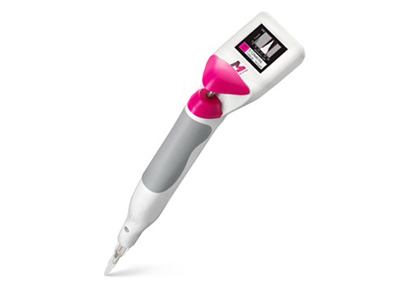
5. Automatic hand cell counter (Millipore)
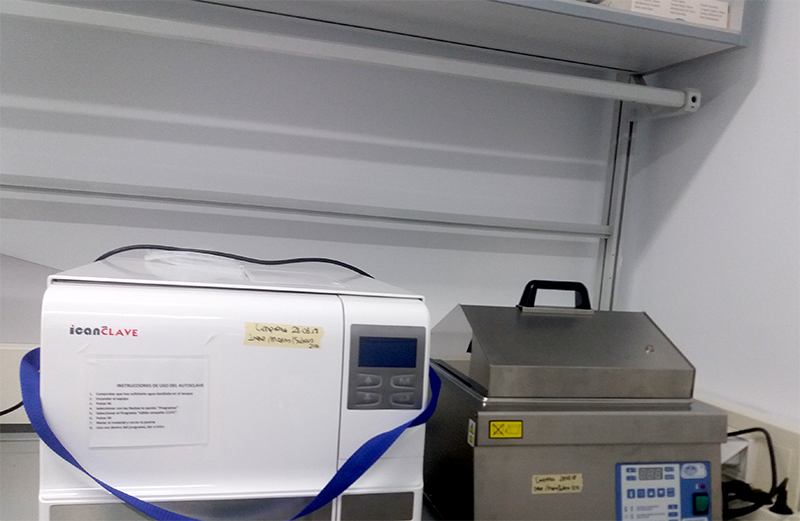
6. An tabletop autoclave and a bathroom
And also:
7. An inverted microscope of transmitted light with 10x, 20x and 40x lenses, Leica brand
8. A vacuum pump
9. A refrigerator / freezer
White room (129)
- Clean gowning pre-room for PPE change and controlled access to the cleanroom.
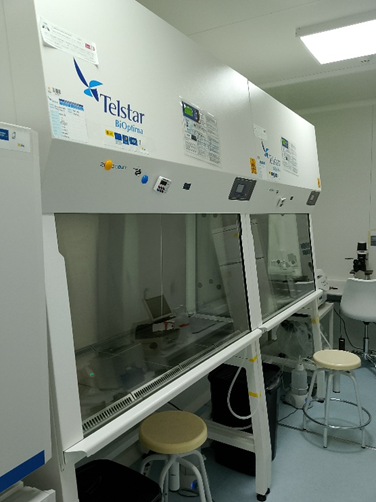
- 2 Telstar BIOptima laminar flow cabinets .
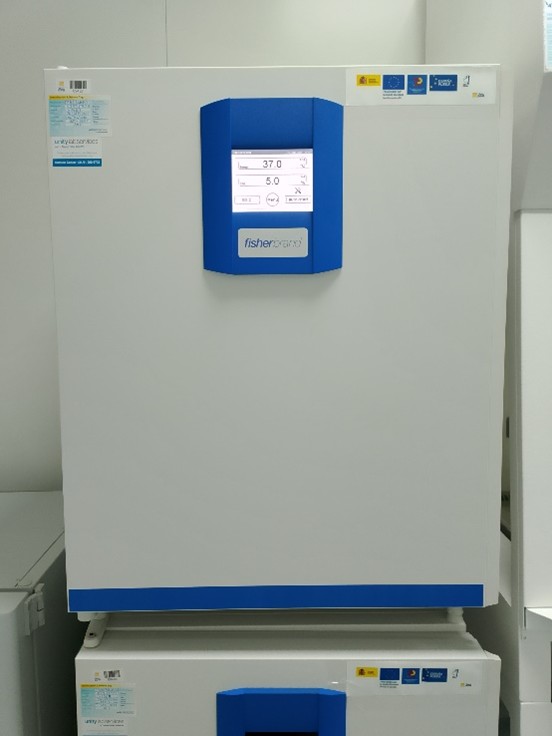
- 2 Thermo Fisher CO₂ incubators, one equipped with an orbital shaker.
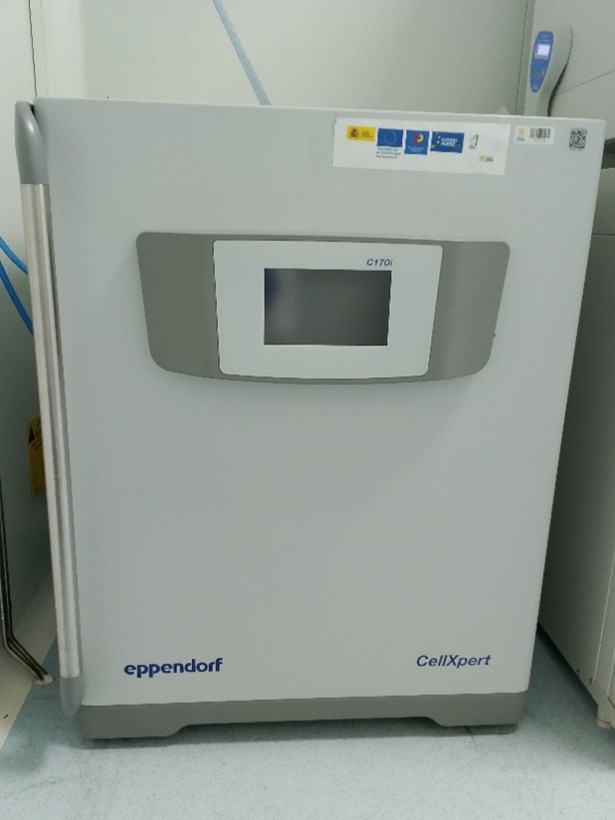
- Eppendorf CellXpert C170i CO₂/hypoxia incubator
- Equipo de litografía para crear patrones en plásticos y producir placas y soportes específicos para células: Jelight UVO Cleaner 30 (usado solo con supervision).
- A VWR Dry bath, two inverted microscopes, a ZOE Cell Imager, a refrigerator and a freezer.
Automated liquid handling and screening platform Room 136
- Cytomat CO₂ incubator —incubation and storage of microplates.
- Biomek i5 (Beckman Coulter) — automated liquid handling and execution of programmable protocols.
- ImageXpress Nano (Molecular Devices) — automated image acquisition and analysis. Equipped with 4×, 10×, 20×, and 40× objectives, transmitted-light imaging, and FITC, Cy3, Cy5, and DAPI fluorescence channels. Environmental control of CO₂/hypoxia and humidity. MetaXpress software for image acquisition and analysis.
.