



Multicellular Dynamics
Molecular and cellular mechanisms regulating epithelia morphogenesis and homeostasis
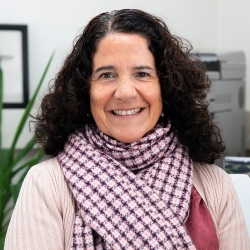
Dra Maria Dolores (Lola) Martín Bermudo
Principal Investigator
Summary
1. Understanding the molecular and cellular mechanisms regulating epithelia morphogenesis and homeostasis
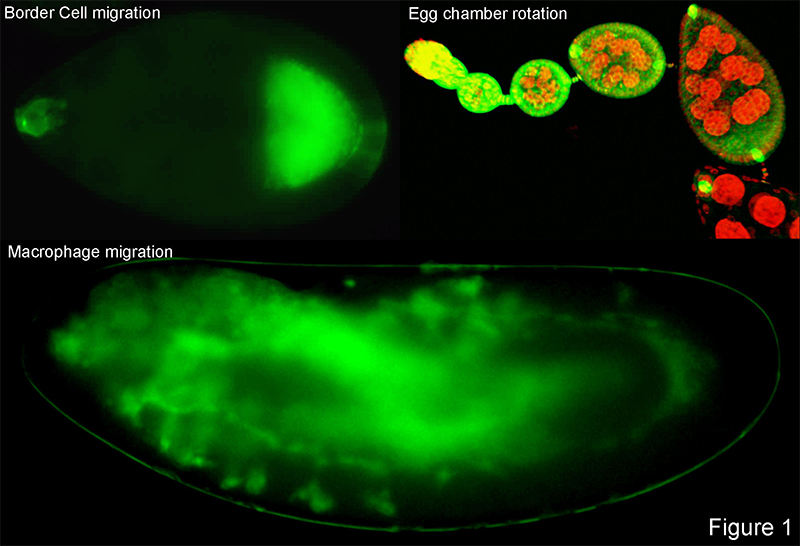
Our laboratory primarily focuses on 2 major research lines: (1) mechanisms underlying cell migration and invasion, and (2) contribution of cell–ECM interactions to epithelial morphogenesis and homeostasis. We employ a multidisciplinary approach integrating genetics, transcriptomics, 4D imaging, biophysics, and computational analysis.
In the context of cell migration, we have shown that, beyond its classical role as a substrate, the ECM can regulate migration by exerting mechanical constraints on the 3D environment through which cells move (Molina et al., PLoS Biol., 2023). Our group has also identified several novel regulators of Ras-driven cell invasion. These include EGRAP, a new EGFR negative regulator (Soler et al., PLoS Genetics, 2021); the Tensin family (Martínez-Abarca et al., Genes, 2023); integrins (Martínez-Abarca et al., Cancer, 2024); and ECM components, such as laminins. Recently, we uncovered key regulators of the tumor-promoting crosstalk between epithelial tumor cells and adjacent mesodermal cells, which include regulators of zinc metabolism, the Hh signaling pathway members, and vesicle trafficking.
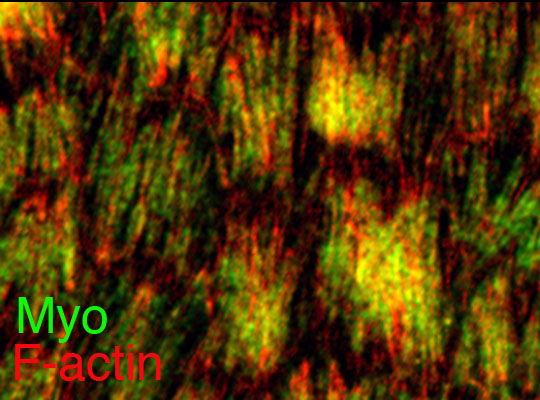
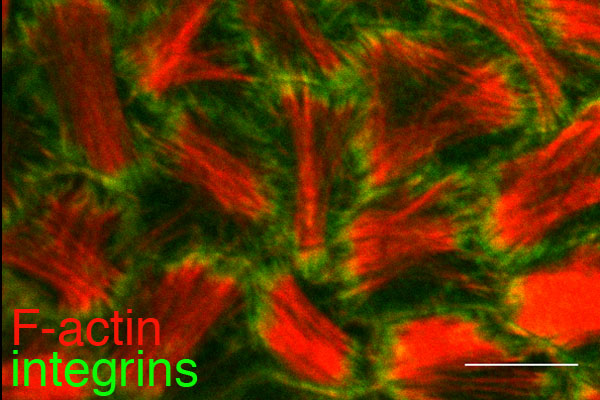
In relation to the role of cell–ECM interactions in epithelial morphogenesis and homeostasis, we have shown that a balance between the mechanical forces generated by epithelial cells and those exerted by the ECM is essential for the cell shape changes driving organogenesis. This has been demonstrated in diverse model systems, including the egg chamber (Santa-Cruz et al., PLoS Genetics, 2020; Hernández-del Valle et al., BMC Biol., 2022), the embryonic tracheal system (Klubmann et al., Cell Reports, 2022), and the wing (Valencia-Expósito et al., Front. Cell and Dev. Biol., 2022; EMBO Journal, 2025). We have also shown that cell–ECM interactions regulate epithelial SC proliferation via modulation of Notch signaling (Rincón-Ortega et al., Front. Cell and Dev. Biol., 2023), and that the mechanical context determines integrin requirement in maintaining epithelial architecture.
I am a founder of the charity DrosAfrica, with the mission of helping to set up an African research community using Drosophila as a model system for human diseases of interest in the area (see http://drosafrica.org for details).
Lab members & Collaborators
Lab members
Principal investigator:
Dr. M.Dolores Martín Bermudo, +34 954348674 (EMBO MEMBER)
Postdoctoral FELLOWS:
Dr Cecilia Huertas Fernandez-Espartero
PHD STUDENTS:
Alejandro Arias Montecino
Mariano Brasal Prieto
Dhawia Elatoui (visiting PhD student from University of Sfax, Tunisia)
Asistentes de laboratorio:
OLD LAB MEMBERS:
Dra Ana Martinez-Abarca Millan
Dra Lourdes Rincón Ortega
Dra Carmen Santa-Cruz Mateos
Dra Ester Molina López
Dra Jennifer Soler Beatty
Dra Andrea Valencia Expósito
Dr Besaiz Jose Sánchez Sánchez
Dra Cecilia Huertas Fernandez-Espartero
Dra M. Jesus Gomez Lamarca
Dra Beatriz Estrada Martin
Dr Juan Jose Perez Moreno
Dr Jose M. Urbano Fernández
Beatriz Ibáñez Jiménez
COLLABORATORS
Prof. Nicholas Brown (Wellcome/CR-UK Institute, Cambridge, UK)
Prof. Acaimo González-Reyes (CABD, Sevilla)
Prof. Christos Delidakis (IMBB, Crete)
Dr David Gómez Miguez (UAM, Madrid)
Dra Marta Llimargas Casanova (IRB, Barcelona)
Dr Isabel Palacios (Queen Mary Univ. of London, UK)
Dra Mao Yanlan (LMB, University College London)
Dr Luis M. escudero (Departamento de Biología celular, Universidad de Sevilla).