



Multicellular Dynamics
Evolution of drug-degrading and antibiotic-resistant bacterial consortia and strains
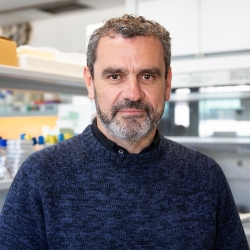
Dr Amando Flores
Researcher
Summary
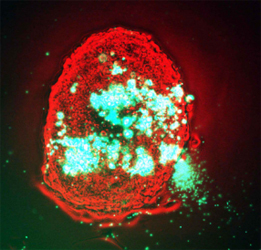
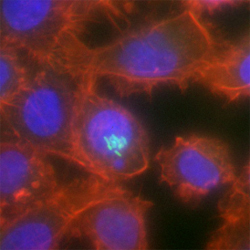
Salmonella enterica serovar Tiphimurium is probably the best-characterised pathogenic bacteria. Previous studies have demonstrated that attenuated Salmonella spp. specifically target and colonize solid tumors, which makes Salmonella a particularly suitable vector for targeted drug delivery to cancer cells. In spite of the extensive variety of existing gene expression systems used in enteric bacteria, no appropriate control circuits are available for regulated expression in Salmonella once it resides within infected cells. Our research group and Biomedal SL have developed bacterial regulatory circuits inducible by salicylate or by aspirin which induce the production of proteins when Salmonella is inside the eukaryotic cell.
Our group aims at assembling attenuated Salmonella strains bearing this regulatory circuit able to produce and secrete different therapeutical agents with application in two biomedical topics. In one hand, we are constructing attenuated strains producing citotoxic agents and necrosis or apoptosis inducers, for their use in antitumor therapy. On the other hand, we are interested in obtaining strains producing eukaryotic transcription factors to be used as stem cells development inducers, strategy that constitutes a novel experimental approach in regenerative medicine.
Five relevant publications
Lab members & Collaborators
Lab members
Group leader:
Dr Amando Flores, +34 954348917
Postdoctoral:
Dr. Eva Camacho, +34 954348644
Dr. Carlos Medina, +34 954348644
Dr. Beatriz Mesa, +34 954348917
Collaborators
Dr. Carlos Guzman (Helmholtz Centre for Infection Research, Braunschwig, Germany)
Dr. Angel Cebolla (Biomedal SL, Sevilla)