



Multicellular Dynamics
Uncovering the bacterial potential for bioremediation and novel antimicrobials
Dra Eva María Camacho Fernández
Researcher
Summary
Bacteria have adapted to thrive in very diverse environments, acquiring various forms of metabolism that allow them to take advantage of available resources. The ability of bacteria to acquire new genes by horizontal transfer processes, allows the emergence of new bacterial strains with new capacities. This, together with the fact that 99% of microorganisms cannot be cultivated in laboratories, opens up a whole world of possibilities with biotechnological potential that remains to be explored. In our group, we take advantage of our bacterial genetics experience to reveal part of this hidden potential, by isolating bacteria, or by direct analysis of environmental DNA, which includes the development of new genetic tools that allow us to maximize the possibilities of success. In this way, our research group tries to provide solutions to two serious problems that concern both the European authorities and the WHO.
On the one hand, we are interested in isolating bacteria capable of degrading emerging pollutants that could be useful in bioremediation processes. Pharmaceutical compounds are one of the pollutants of greatest concern today due to their effect on living beings. In our laboratory, we work on the isolation of microorganisms from various environmental samples, capable of degrading the most frequently used pharmaceutical compounds that are detected as contaminants. In this way, we have isolated the MPO218 strain of Sphingomonas wittichii that is capable of growing on ibuprofen as the sole carbon and energy source. We are currently characterizing this bacterium and its ability to biodegrade ibuprofen. In addition, we continue searching for microorganisms and microbial communities capable of degrading other drugs.
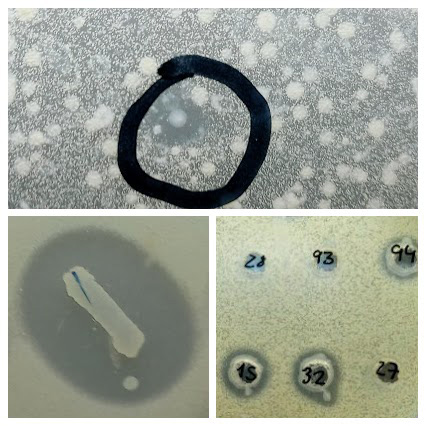
On the other hand, we are interested in providing solutions to another serious problem, the lack of new effective antimicrobial compounds against multi-resistant bacteria. Bacteria multi-resistant to current antibiotics are one of the main threats to public health in the 21st century. Since most of the clinical antimicrobials comes ultimately from nature, and given the extraordinary microbial diversity that still remains hidden in nature, since most microorganisms have not yet been cultivated in laboratory, one attractive approach is to search nature to find genetic determinants coding for new antimicrobials using a functional metagenomics approach. We are working on the development of new tools that allow us to improve our ability to detect activities from environmental DNA. With our improved vectors and strains, we are constructing and screening various metagenomic-libraries from different environmental samples for the search, among other activities, of new effective antimicrobial compounds against multi-resistant bacteria such as MRSA.