



Evolutionary Dynamics
Bioinformatics and Computational Biology
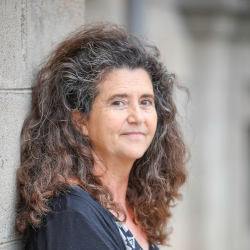
Dra. Ana M. Rojas,
Principal Investigator & Department Director
Summary
Computational Biology and Bioinformatics Group- CBBiO
Principal Investigator, Department Director
Research focus
The Computational Biology and Bioinformatics Group investigates how proteins evolve, acquire new functions and adapt to different biological contexts. We combine evolutionary biology, structural bioinformatics, artificial intelligence and large-scale biological data analysis to study the relationship between protein sequence, structure and function.
Our research addresses three principal questions:
-
How do proteins evolve and acquire new or multiple functions?
-
How do mutations and structural changes affect protein activity?
-
How can computational and AI-based methods improve protein-function annotation, particularly in non-model organisms and poorly characterised proteomes?
A major current focus is the development and application of protein language models. These models learn biological information from millions of protein sequences and allow us to predict function, compare proteins in high-dimensional representation spaces and investigate previously uncharacterised regions of the proteome.
Main research lines
Protein evolution, structure and function
We study the evolutionary mechanisms through which proteins diversify, change their molecular functions or develop multifunctionality. Particular attention is given to the relationship between sequence variation, three-dimensional structure and biological activity, including proteins involved in cellular signalling.
Artificial intelligence for protein-function analyses
We develop scalable approaches that use protein language models and sequence embeddings to assign functional information to proteins. Our work includes FANTASIA (Functional ANnoTAtion based on embedding-space SImilArity), a computational framework designed to annotate proteins efficiently across very large genomic and proteomic datasets.
These methods are being applied both to model organisms and to millions of genes from early-diverging animal lineages, helping illuminate the biological “dark proteome”: proteins for which little or no reliable functional information is currently available.
Mutations, conformational diversity and disease
We investigate how amino-acid substitutions and changes in protein conformation influence molecular function. This includes the study of protein multifunctionality, metamorphic proteins, allosteric regulation and disease-associated variants.
Our collaborations on nuclear receptors have contributed to understanding how alternative interaction surfaces, post-translational modifications and allosteric mechanisms affect receptor activity, pathology and therapeutic resistance.
Integrative analysis of biological data
The group also integrates genomic, transcriptomic and epigenomic information to address biologically and clinically relevant questions. We develop bioinformatics pipelines for analysing and combining different types of molecular data, including tools for the joint study of messenger RNA, microRNA and other RNA species.
Our software is made available through the CBBiO public repositories to encourage reuse, reproducibility and collaboration.
Team and scientific environment
Founded in Barcelona in 2009, the group moved to Seville in 2013 and has been based at the Andalusian Centre for Developmental Biology since 2018.
CBBiO brings together biologists, bioinformaticians, computer scientists and engineers. This interdisciplinary environment enables the group to connect fundamental biological questions with algorithm development, artificial intelligence and advanced computational infrastructure.
The group participates actively in national and international collaborations and in the computational-biology community, including the Function Community of Special Interest of the International Society for Computational Biology.
Training and careers
We provide interdisciplinary training in evolutionary biology, protein science, bioinformatics, artificial intelligence and scientific computing. Former group members have continued their careers as independent group leaders, directors of bioinformatics platforms and founders or executives of biotechnology companies.
Researchers, students and technical professionals interested in joining the group or developing a collaboration are encouraged to contact Dr Ana M. Rojas.
More information regarding the group here: http://www.bioinfocb.es/
Relevant publications (all times selected)
- Fernandez, R.*., Valverde, S., Bombarely, A., Cases, I., Handley, S., Rojas, AM.*. 2026. Rethinking molecular evolution through protein language model embeddings. Trends in Genetics. Link
- Pérez-Canales FM, Alanís-Domínguez E, Rojas AM*. Computational Identification of Potential Shape-Shifting Proteins from Structures. Methods Mol Biol. 2026 ;2979:157-164. doi: 10.1007/978-1-0716-4828-5_10. DOI
- Martínez-Redondo* GI, Perez-Canales FM, Carbonetto B, Fernández JM, Barrios-Núñez I, Vázquez-Valls M, Cases I, Rojas AM*, Fernández R*. FANTASIA leverages language models to decode the functional dark proteome across the animal tree of life. Commun Biol. 2025 Aug 14;8(1):1227. doi: 10.1038/s42003-025-08651-2. DOI
- Valverde, S., Vidiella, B., Martínez-Redondo, G., Duran-Nebreda, S., Fernández, R., Bombarely, A., Rojas AM., and Bentley, R.A., 2025. Structural Changes in Gene Ontology Reveal Modular and Complex Representations of Biological Function. Mol Biol Evol. doi: 10.1093/molbev/msaf148. DOI
- Cases I, Martínez-Redondo G, Fernández R, Rojas AM*. Functional Annotation of Proteomes Using Protein Language Models: A High-Throughput Implementation of the ProtTrans Model. Methods Mol Biol. 2025; 2941:127-137. doi: 10.1007/978-1-0716-4623-6_8. DOI
- Barrios-Núñez I, Martínez-Redondo GI, Medina-Burgos P, Cases I, Fernández R*, Rojas AM*. Decoding functional proteome information in model organisms using protein language models. NAR Genom Bioinform. 2024 Jul 2;6(3):lqae078. doi: 10.1093/nargab/lqae078. DOI
- Alegre-Martí A, Jiménez-Panizo A, Martínez-Tébar A, Poulard C, Peralta-Moreno MN, Abella M, Antón R, Chiñas M, Eckhard U, Piulats JM, Rojas AM, Fernández-Recio J, Rubio-Martínez J, Le Romancer M, Aytes Á, Fuentes-Prior P, Estébanez-Perpiñá E. A hotspot for posttranslational modifications on the androgen receptor dimer interface drives pathology and anti-androgen resistance. Sci Adv. 2023 Mar 17;9(11):eade2175. doi: 10.1126/sciadv.ade2175. Epub 2023 Mar 15. DOI
- Jiménez-Panizo A, Alegre-Martí A, Tettey TT, Fettweis G, Abella M, Antón R, Johnson TA, Kim S, Schiltz RL, Núñez-Barrios I, Font-Díaz J, Caelles C, Valledor AF, Pérez P, Rojas AM, Fernández-Recio J, Presman DM, Hager GL, Fuentes-Prior P, Estébanez-Perpiñá E. The multivalency of the glucocorticoid receptor ligand-binding domain explains its manifold physiological activities. Nucleic Acids Res. 2022 Dec 9;50(22):13063-13082. doi: 10.1093/nar/gkac1119. DOI
- Libros Blancos Desafíos Científicos 2030. 2022. CSIC: Vol. 3 Genome and Epigenetics (coordinadora del capítulo 2) y Vol. 5 Brain, Mind and behaviour (participante del reto 2).
- Santana-Molina C*, Rivas-Marin E, Rojas AM*, Devos DP*. Origin and Evolution of Polycyclic Triterpene Synthesis. Mol Biol Evol. 2020 Jul 1;37(7):1925-1941. doi: 10.1093/molbev/msaa054. DOI
- Fuentes-Prior P, Rojas A, Hagler AT, Estébanez-Perpiñá E. Diversity of Quaternary Structures Regulates Nuclear Receptor Activities. Trends Biochem Sci. 2019 Jan;44(1):2-6. doi: 10.1016/j.tibs.2018.09.005. Epub 2018 Oct 4. PMID: 30293659. DOI
- Andrés-León E*, Cases I, Alonso S*, Rojas AM*. Novel miRNA-mRNA interactions conserved in essential cancer pathways. Sci Rep. 2017 Apr 7;7:46101. doi: 10.1038/srep46101. DOI
- Castañeda-García A, Prieto AI, Rodríguez-Beltrán J, Alonso N, Cantillon D, Costas C, Pérez-Lago L, Zegeye ED, Herranz M, Plociński P, Tonjum T, García de Viedma D, Paget M, Waddell SJ, Rojas AM*, Doherty AJ*, Blázquez J*. A non-canonical mismatch repair pathway in prokaryotes. Nat Commun. 2017 Jan 27;8:14246. doi: 10.1038/ncomms14246. DOI
- Rojas AM*, Fuentes G, Rausell A, Valencia A*. The Ras protein superfamily: evolutionary tree and role of conserved amino acids. J Cell Biol. 2012 Jan 23;196(2):189-201. doi: 10.1083/jcb.201103008. DOI
- Jiménez-Baranda S, Gómez-Moutón C, Rojas A, Martínez-Prats L, Mira E, Ana Lacalle R, Valencia A, Dimitrov DS, Viola A, Delgado R, Martínez-A C, Mañes S. Filamin-A regulates actin-dependent clustering of HIV receptors. Nat Cell Biol. 2007 Jul;9(7):838-46. doi: 10.1038/ncb1610. Epub 2007 Jun 17. DOI
Lab members & Collaborators
Lab members
Principal investigator:
Dr Ana M. Rojas, +(34) 954 977 373, a.rojas.m@csic.es
-
- Founder member of the Spanish Society for Computational Biology and Bioinformatics (SEBIBiC).
- COSI Function Track Chair for the International Society for Computational Biology (ISCB).
- Executive Board of the Computational Biology and Bioinformatics CSIC Network (BCB.Hub).
- Researcher in the Google Spain-University of Seville Chair for Artificial Intelligence.
- Associate Editor of Nucleic Acid Research Genomics and Bioinformatics.
Associate Investigator:
Ildefonso Cases, tenured CSIC scientist. Bioinformatics Unit Head.
Engineer/Programmer:
Sergio Valdivia Morales.
PhD students:
Antonio Pérez Velasco (USE)
Alez Dominguez Rodriguez (UPO)
Enrique Alanis Dominguez (UPO)
Patricia Medina Burgos (UPO)
Visiting Scientists:
Posdoc: María Victoria Mencucci (Univ de la Plata)
Predoc: Sandra Moreu (Marian Ros lab, IBBTEC)
Predoc:Gemma Martínez-Redondo (Rosa Fedz. Lab, IBE).
Predoc: Cayetano Navas.
Former Students:
Alberto del Cueto (TFM)
Gabriel Jimenez (TFM)
Antonio Parra (TFM).
Javier Tubio (USE, TFG)
Previous lab members:
Francisco M. Perez-Canales.
Israel Barrios Nuñez (now working for the Spanish goverment).
Eduardo Andres Leon (now tenured CSIC Scientist, head of Bioinformatics at IPBLN-CSIC. Granada)
Eduard Porta Pardo (now Junior Group Leader at IJC, Badalona, Barcelona)
Aida Arcas Manta (now Senior Bioinformatician at CLARIVATE)
Juan Antonio Cordero (now technical head of the Bioinformatics Unit at IBIS, Sevilla)
Rocio Nuñez (now Posdoc Researcher at Javier Benitez lab, CNIO, Madrid)
Joel Lopez (now CTO at BTC assesors, Andorra)
Alba Gutierrez (now Posdoc Rsearcher at Harvard, USA)
Ida Paramonov (now programmer and Data analyst at CNAG)
Collaborators
Dr. Harald Wodrich (Director of Research, MPF-CNRS, Bordeaux, France).
Dr. Paul Taylor (Professor, University of Leeds, UK).
Dr. Iddo Friedberg (Prof. Computational Biology. Iowa State University, USA)
Dr. Mark Wass ( Prof. of Computational Biology. University of Kent, UK)
Dr. Dukka KC (Prof. of Computer Science. Rochester Institute of Technology, USA)
Dra. Rosa Fernandez (CSIC Tenured Researcher, IBE, Barcelona, Spain)
Dr. Aureliano Bombarely (CSIC Research Professor, IBMPC, Valencia,Spain)
Dr. Eva Estebanez-Perpiña (Professor. IBUB, Barcelona), Spain.
Dr. Silvia Salas (Profesor. CABD-UPO, Sevilla, Spain).
Dra. Mercedes Ricote (CSIC Rsearch cientist, CNB-CSIC, Madrid, Spain).
Dr. Sergio Alonso (Principal Investigator, IGTP, Barcelona, Spain).
Dr. Fernando Casares (CSIC Research Professor, CABD, Sevilla, Spain).
Dr. Damien Devos (Principal Investigator, Insitute Pasteur Lille, France).
Dr. Amancio Carnero (CSIC Research Professor,IBIS, Sevilla, Spain).