



Evolutionary Dynamics
Molecular Evolution of Microbial Interactions

Dra Tanja Dapa
Junior Group Leader
Summary
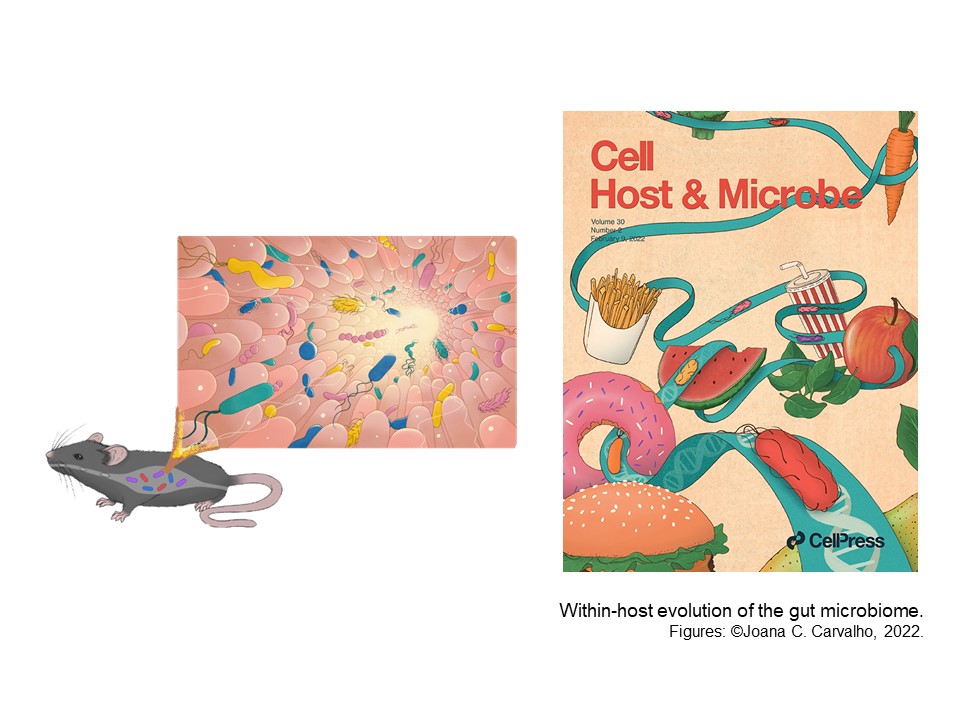
The gut microbiota is a complex community of billions of different microorganisms that inhabit the host’s intestine. In mammals, the gut microbiota and the host establish a strong symbiotic relationship, in which the intestine provides a favorable environment for microbes and, in return, microbes (i) contribute to nutrition of the host, by transforming nutrients that cannot be readily digested by the host into simpler compounds that the host is able to assimilate; (ii) synthetize different vitamins; (iii) are involved in the development of the host`s immune system, by having a critical role in the induction of lymphoid structures and modulation of immune cell differentiation; (iv) are essential for proper development and morphogenesis of host tissues and organs; (v) and, by a phenomenon known as colonization resistance, gut microbes serve as physical barrier, providing protection against microbial pathogens. However, external variables like medications and antibiotic treatments, dietary and feeding modifications, etc., can quickly alter the microbial composition in the gut, which consequently alters the aforementioned microbial processes that take place within the intestine.
Studying the mechanisms underlying gut microbiota functions and its interaction with the host immune system is complicated due to the facts that the gut is an extremely dynamic environment, and that interactions between different microbial members, with the physiology of the host, and the interplay between them are complex. To overcome the challenge of such complexity, in the Molecular Evolution of Microbial Interactions laboratory (MolEMI Lab) we approach the study of gut microbiota functions by using experimental evolution, forward and reverse genetics and genetic engineering. We use the murine gut as a model for the mammalian gut. Previously, I was able to identify beneficial mutations that spontaneously emerged during evolutionary adaptation of anthropogenic Bacteroides thetaiotaomicron to the mouse gut and showed that nutritional perturbation leaves a genetic signature even on a single bacterial species. Now, by exploring the mutational landscape arising from multiple parallel evolutionary experiments, we aim to identify targets/mutations that appear exclusively under specific selective pressures (nutritional, environmental, host-related) and may be crucial for different processes affected by the interaction between the microbe and the host.
Our overall aim is to determine the mechanisms underlying genetic and functional interactions within the gut microbiota and with the host, to reveal key factors for stability and robustness of the microbiota, understand the mechanisms behind gut microbiota-immune system interactions by dissecting their coevolutionary process and, ultimately, propose novel strategies to avoid diversity loss in the microbiota and/or promote its recovery after unbalancing events.
Five relevant publications
Lab members & Collaborators
Lab Members
Junior Group Leader:
Tanja Dapa (https://orcid.org/0000-0002-5989-362X)
Predoctoral researcher:
Inmaculada Mena Guzmán
Collaborators
Karina B. Xavier (Instituto Gulbenkian de Ciência, Oeiras, Portugal)
Ricardo S. Ramiro (InnovPlantProtect, Elvas, Portugal)