



Multicellular Dynamics
Programmed cell death during development and disease
Dr Jose Antonio Sánchez-Alcazar
Principal Investigator
Summary
https://sanchezalcazarlab.com/
Grupo PAIDI: BIO336
Ongoing Projects
Therapy for NBIA and other neurodegenerative
diseases such as Friedreicj’s ataxia, ELA, etc.
Therapy for mitochondrial diseases
Therapy for kat6a syndrome
Therapy for congenite mypathies
Precision medicine in rare diseases
Rare diseases are those that have a low prevalence in the population (less than 5 individuals per 10,000 inhabitants). However, infrequent pathologies affect a large number of people, since according to the World Health Organization, there are about 7,000 rare diseases that affect 7% of the world’s population. In total, it is estimated that in Spain there are more than 3 million people affected of rare diseases.
Many patients with rare diseases have suffered the consequences of what is called the diagnostic odyssey, that is, extensive and prolonged serial tests and clinical visits, sometimes for many years, all with the hope of identifying the etiology of their disease. In recent years, efforts made in massive DNA sequencing have been successful in identifying many of the genes that participate in these diseases.
For patients with rare diseases, obtaining the genetic diagnosis can mean the end of the diagnostic odyssey, and the beginning of another, the therapeutic odyssey. Knowing the causal genetic variant can provide some information about reproductive risk to the patient or family members and can eliminate some prognostic uncertainties, but often does not provide an effective therapeutic or preventive alternative. This scenario is especially challenging for the scientific community, since more than 90% of rare diseases do not currently have an effective treatment. This therapeutic failure in rare diseases means that new approaches are necessary. Our group proposes that the use of precision or personalized medicine techniques can be an alternative to find potential therapies in these diseases.
To this end, we propose that patients’ own cells can be used to carry out personalized pharmacological screening. This approach is based on the hypothesis that different mutations and inter-individual genetic variation can contribute significantly both to disease susceptibility and to the response to pharmacological treatments. The goal of personalized medicine is to maximize the likelihood of therapeutic efficacy and minimize the risk of drug toxicity for an individual patient.
Preliminary results of our group studying a rare genetic disease called “Neurodegeneration with Brain Iron Accumulation” (NBIA) have shown that fibroblasts derived from patients can reproduce many of the pathological alterations found in the disease, such as the intracellular accumulation of iron. In addition, specific treatments with compounds used in clinical practice have been able to eliminate these pathological alterations. These results encourage us to propose our pharmacological screening model as a quick and easy way to find personalized treatments for patients with NBIA and other rare diseases with neurological involvement.
The extension in the use of the tools that precision medicine provides in patients with rare genetic diseases that clinically manifest severe neurological or muscular symptoms is one of the objectives of our group for the coming years.
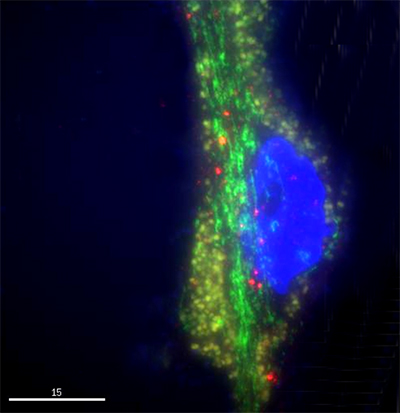
The Apoptotic microtubule network during the execution phase of apoptosis
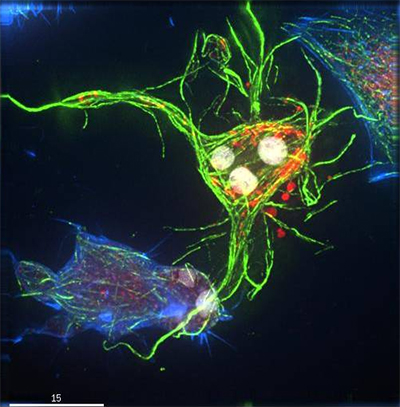
It has recently been shown that the microtubule cytoskeleton is reformed during the execution phase of apoptosis forming an apoptotic microtubule network (AMN). AMN is closely associated with the plasma membrane, forming a cortical ring or cellular “cocoon”. Concomitantly other components of the cytoskeleton, such as actin and cytokeratin filaments disassemble. Previously, we have demonstrated that this microtubule reformation occurs in many cell types and under different apoptotic stimuli. Our working hypothesis proposes that AMN is required to maintain plasma membrane integrity and cell morphology during the execution phase of apoptosis. AMN disruption leads cells to secondary necrosis, release of toxic molecules, and it might damage neighbours cells. Therefore, AMN formation in apoptosis during development and adult organisms is essential for tissue homeostasis in multicelullar organisms. We will generate different models expressing fluorescent actin and tubulin to study the reorganization of actin filaments and microtubules in vivo. In these models we will look for the signaling pathways involved on AMN formation. To study AMN nucleation, whose molecular mechanism is unknown, we will study AMN components and associated proteins, and we will evaluate their particular contribution to AMN formation. Moreover, we will study whether AMN maintenance dependent on mitochondrial function, and the effects of cytoskeleton reorganization on mitochondrial function and dynamics. Finally, we will study the role of AMN in the context of a multicelullar organism during developmental apoptosis. We will generate a Drosophila transgenic strain expressing a mutant tubulin with the cleavage consensus sequence of caspases (DEVD). In this transgenic strain, we expect that mutant tubulin will be degraded by caspases, microtubules disorganized, and the formation of AMN will be impaired during the execution phase of apoptosis. We will look for abnormalities in normal development in this transgenic strain.
In summary, we propose the development of different molecular and cellular approaches to better know the formation, dynamics, coordination and function of AMN during the execution phase of apoptosis.
Molecular and physiopathological mechanisms of mitophagy in mitochondrial diseases
Coenzyme Q10 (CoQ) deficiencies have a great relevance due to its high prevalence, easy diagnosis, and efficient treatment. More than ten genes have been identified in the human nuclear genome required for CoQ biosynthesis (COQ genes). Mutations in these genes induce primary CoQ deficiency with different clinical manifestations. Secondary CoQ deficiencies have been found in a wide spectrum of diseases including, mitochondrial diseases with mutations in both mitochondrial DNA or nuclear DNA, neurodegenerative diseases such as Parkinson, fibromyalgia, cancer, and in patients under statin treatment. We hypothesize that CoQ deficiency alters mitochondrial function, and induce increase oxidative stress, and the activation of mitochondrial permeability transition, which triggers the selective degradation of impaired mitochondria by mitophagy. To demonstrate it, we will work with fibroblasts derived from patients with mitochondrial diseases with primary o secondary CoQ deficiency, and with animal models of mitochondrial diseases with CoQ deficiency generated by us. As model of primary deficiency, we will generate Caenorhabditis elegans strains with COQ genes mutated or silenced by RNAi. As secondary CoQ deficiency, we will work with Caenorhabditis elegans strains by silencing mitochondrial citochrome c oxidase assembly genes. In these models, we will study mitophagy in muscular and nervous tissues which are the most affected in CoQ deficiencies.
Five relevant publications
Lab members
Lab members
Jefe de grupo
Dr. José Antonio Sánchez-Alcázar, +34 95 4978071, jasanalc@upo.es
PhD
Mónica Álvarez Córdoba
Juan Miguel Suárez Rivero
PhD students
Suleva Povea Cabello
Manuel Munuera Cabeza
Irene Villalon Garcia
Alejandra Suárez Carrillo
Marta Talaveron Rey