


Multicellular Dynamics

Fungal and Yeast Biotechnology
Dr José Ignacio Ibeas Corcelles

Principal Investigator

Summary


Fungal and yeast biotechnology

Identification and analysis of new targets in plant pathogenic fungi
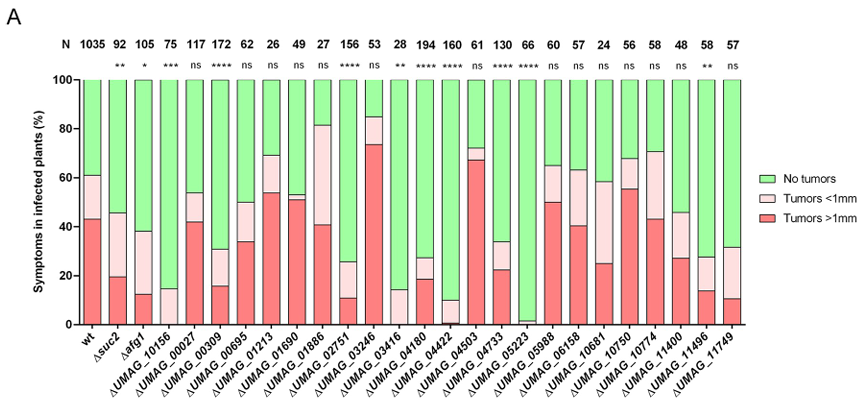
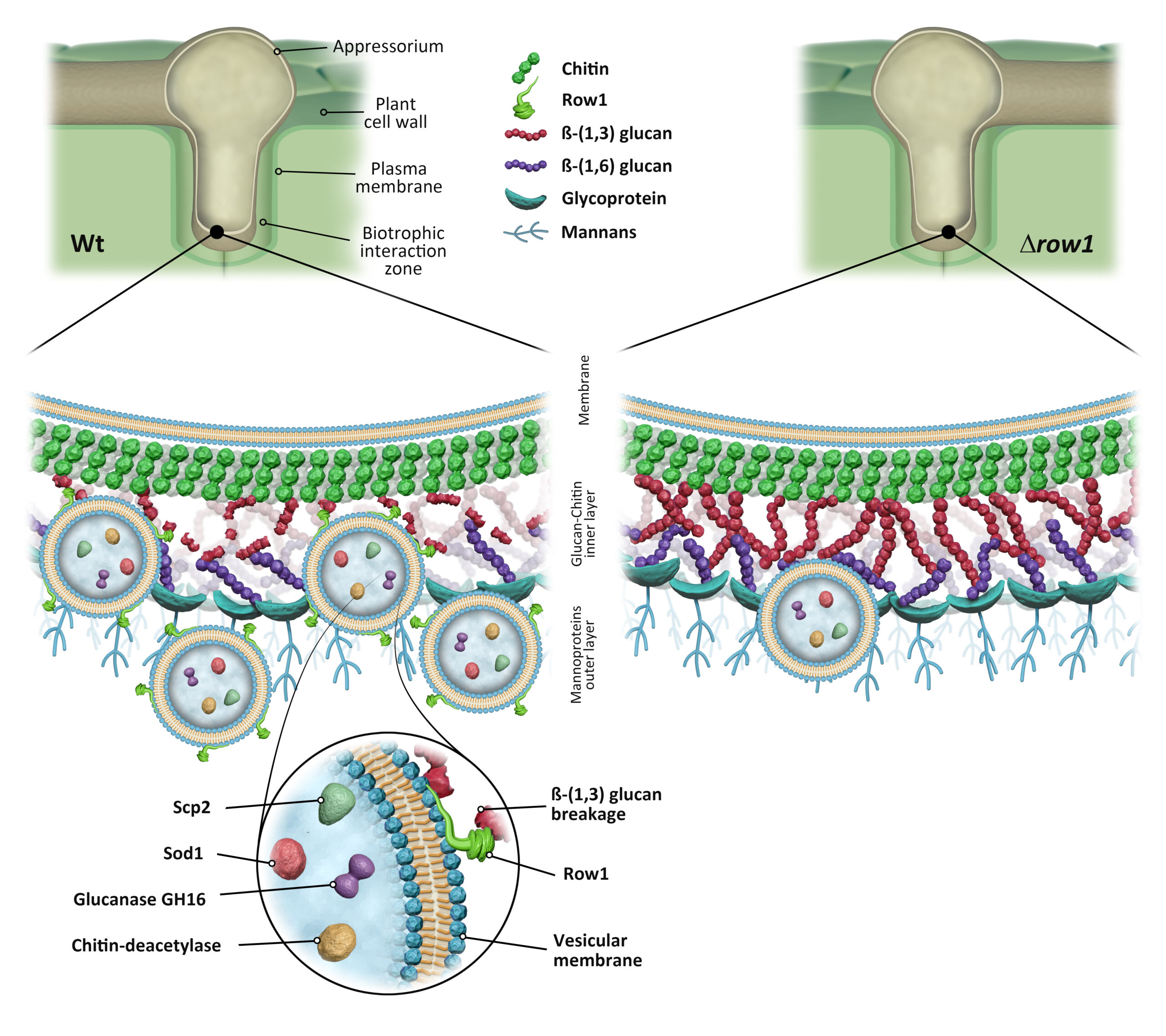
Plant pathogenic fungi share the ability to alter their growth form depending on the stage of infection they are in (yeast-like, filament, formation of specialized penetration structures, spores, etc.). These developmental changes are accompanied by the secretion of proteins that interact with the host to prevent detection or avoid their proliferation. This constant change in behaviour of the fungus during the infectious process must be highly regulated. In our laboratory, we study the proteins used by plant pathogenic fungi to infect, as well as the mechanisms they employ to regulate their expression and control the different changes in their development during the infectious process. For this purpose, we use the model organism Ustilago maydis, a maize pathogen that causes what is known as corn smut. The combined use of molecular biology techniques for microbial genome editing, Mass Spectrometry, RNA-seq, and ChIP (Chromatin Immunoprecipitation) among others, in combination with cellular biology techniques such as fluorescence microscopy, have allowed us to determine the essential role of protein glycosylation in the infection process and allowed us to identify and characterize several glycoproteins involved in plant infection. Moreover, we could determine the role of chromatin modification, specifically histone acetylation, in the infectious process. Currently, we are studying new systems through which plant pathogenic fungi control infection and characterizing new proteins involved in host interaction. Many of these mechanisms are conserved among fungi, so the results obtained using U. maydis as a model organism can be transferred to other plant pathogenic fungi and even animal pathogens.


Study of the biodiversity of wine and beer yeasts

Yeast plays an essential role in the final quality of fermented beverages, especially wine and beer. Although strains of yeast isolated from these fermentations are currently known to confer specific organoleptic characteristics to the beverage, in recent years there has been a resurgence in demand for new unique strains, sometimes with territorial characteristics, others where the enhancement of certain aroma or flavor predominates in the final product, for use in wineries and mainly in microbreweries. In our laboratory, we have been studying the genetic peculiarities of these yeasts for years and studying the biodiversity of strains present in the production of fine wine. We are currently moving into the world of beer, where we are systematically searching for new local strains with brewing interest. For this purpose, we have created two research platforms, a robotic platform for the manipulation and characterization of multiple isolates simultaneously and a research microbrewery, capable of producing 500 L of beer to test the selected yeasts.

Five relevant publications


  • Marín-Menguiano M, Moreno-Sanchez, I, Barrales RR, Fernández-Álvarez A, and Ibeas J.I. (2019) N-glycosylation of the protein disulfide isomerase Pdi1 ensures full Ustilago maydis virulence. PLoS Pathog. 2019 Nov 15;15(11):e1007687. doi:10.1371/journal.ppat.1007687
  • Elías-Villalobos A, Barrales RR, Ibeas JI. (2019) Chromatin modification factors in plant pathogenic fungi: Insights from Ustilago maydis. Fungal Genet Biol. 129:52-64. doi:10.1016/j.fgb.2019.04.006.
  • Marin-Menguiano M, Romero-Sanchez S, Barrales RR, Ibeas JI. (2017) Population analysis of biofilm yeasts during fino sherry wine aging in the Montilla-Moriles D.O. region. Int J Food Microbiol. Mar 6;244:67-73. doi: 10.1016/j.ijfoodmicro.2016.12.019.
  • Elías-Villalobos, A., Fernández-Alvarez, A., Moreno-Sanchez, I Helmlinger D. and Ibeas J.I. (2015) The Hos2 Histone Deacetylase Controls Ustilago maydis Virulence through Direct Regulation of Mating-Type Genes. PLoS Pathogens 11 :e1005134. doi:10.1371/journal.ppat.1005134.
  • Fernández-Álvarez A, Elías-Villalobos A, Jiménez-Martín A, Marín-Menguiano M, Ibeas JI. (2013) Endoplasmic reticulum glucosidases and protein quality control factors cooperate to establish biotrophy in Ustilago maydis. Plant Cell. Nov 2013. doi:10.1105/tpc.113.115691.

Lab members & Collaborators


Lab members

Group leader:

Dr José Ignacio Ibeas Corcelles, Tel: +34 954349379, Fax: +34 954349376

Associated Researcher:

Dr Ramón Ramos Barrales, Tel: +34 954349379, Fax: +34 954349376

PhD students:

Estela Sanz Martí
Clara Salmerón Segura

Laboratory technicians:

Victor Manuel Carranco Fabre

Former students:

Marcos ALguacil Algarrada (PhD)
Ramón Ramos Barrales (PhD)
Alfonso Fernández Álvarez (PhD)
Alberto Elias Villalobos (PhD)
Miriam Marín Menguiano (PhD)
Ismael Moreno Sánchez (PhD)
Blanca Navarrete Ruíz de Calvijo (PhD)
María Dolores Pejenaute Ochoa (PhD)

Collaborators

 Dr Jose Manuel Pardo Prieto (IRNA. CSIC)
Dr Ray A. Bressan (Prudue University)
Dr Neil A.R. Gow (University of Aberdeen)
Dr Regine Kahmann (Max-Planck-Institut fuer terrestrische Mikrobiologie, Marburg, Germany)
Dr Philipp Korber, (Adolf-Butenandt-Institut, University of Munich, Germany)
Dr Jose Perez-Martin (Instituto de Biología Funcional y Genómica CSIC, Salamanca, Spain)