



Organismal Dynamics
Molecular bases of Coenzyme Q deficiency and bioenergetics of development
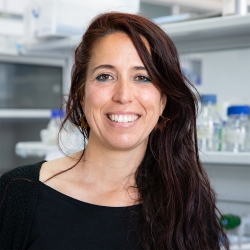
Dra. Gloria Brea Calvo
Researcher
Summary
Primary Coenzyme Q (CoQ) deficiencies are rare conditions caused by biallelic mutations in one of the COQ genes involved in its biosynthesis. They are characterized biochemically by a reduction in CoQ, a lipid essential for energy production through oxidative phosphorylation in the mitochondria. Primary CoQ deficiencies are clinically highly heterogeneous. Many patients present a neonatal debut and a fatal outcome early in life. Still, the molecular basis for the origin of the disease is largely unknown, and there is no clear genotype-phenotype correlation. This difficulty is added to the low number of identified patients.
With the idea of offering an updated database of identified patients for each gene, detailing the frequency of symptoms, we have created a handy online platform for clinicians, research staff and families:
https://coenzymeqbiology.github.io/clinic-CoQ-deficiency/
In recent years we have focused our work on the study of the pathogenesis of CoQ deficiencies caused by mutations in COQ4, one of the genes involved in CoQ biosynthesis, whose function is still unknown. In 2015 we described the first five patients with pathogenic variants of this gene. Mutations in COQ4 are severe, being a lethal condition in most cases during the first weeks or months after birth.
To study these deficiencies, we use fibroblasts from patients and COQ4 knock-out cell lines generated by CRISPR/Cas9. Our latest results suggest that COQ4 could have a double function, participating in CoQ biosynthesis and being involved in the coordination of the synthesis of this molecule and the expression of the subunits of the respiratory chain encoded by mtDNA.
Currently, the regulation of CoQ biosynthesis during development and its coordination with mitochondrial biogenesis during this period is entirely unknown. To better understand the pathogenesis of the disease, we aim to investigate the regulation of CoQ biosynthesis in genetically modified cell lines and during development by creating various Danio rerio (zebrafish) models that recapitulate CoQ deficiency.
Early diagnosis is crucial, as patients can benefit from CoQ supplementation, although responsiveness is highly variable. The low bioavailability of the molecule probably limits its efficacy, so alternative treatments are being investigated. We are interested in testing the effectiveness of various ‘bypass’ treatments of the biosynthesis pathway in the zebrafish model.
Relevant publications
- Alcázar-Fabra M, Rodríguez-Sánchez F, Trevisson E, Brea-Calvo G. Primary Coenzyme Q deficiencies: A literature review and online platform of clinical features to uncover genotype-phenotype correlations. Free Radic Biol Med. 2021 Mar 4;167:141-180. doi: 10.1016/j.freeradbiomed.2021.02.046
- Pérez-Pulido AJ, Asencio-Cortés G, Brokate-Llanos AM, Brea-Calvo G, Rodríguez-Griñolo R, Garzón A, Muñoz MJ. Serial co-expression analysis of host factors from SARS-CoV viruses highly converges with former high-throughput screenings and proposes key regulators. Briefings in Bioinformatics. 2021 Jan 18; bbbaa419. doi: 10.1093/bib/bbaa419
- Luna-Sanchez M, Benincá C, Cerutti R, Brea-Calvo G, Yeates A, Scorrano L, Zeviani M, Viscomi C. Opa1 Overexpression Protects from Early-Onset Mpv17-/–Related Mouse Kidney Disease. Mol Ther. 2020 Aug 5;28 (8):1918-1930. doi: 10.1016/j.ymthe.2020.06.010.
- Dhandapani PK, Begines-Moreno IM, Brea-Calvo G, Gärtner U, Graeber TG, Javier Sanchez G, Morty RE, Schönig K, Hoeve JT, Wietelmann A, Braun T, Jacobs HT, Szibor M. Hyperoxia but not AOX expression mitigates pathological cardiac remodeling in a mouse model of inflammatory cardiomyopathy. Sci Rep. 2019 Sep 4;9(1):12741. doi: 10.1038/s41598-019-49231-9.
- Acosta Lopez, M.J., Trevisson, E., Canton, M., Vazquez-Fonseca, L., Morbidoni, V., Baschiera, E., Frasson, C., Pelosi, L., Rascalou, B., Desbats, M.A., et al. (2019). Vanillic Acid Restores Coenzyme Q Biosynthesis and ATP Production in Human Cells Lacking COQ6. Oxid. Med. Cell. Longev.1–11.
- Vázquez-Fonseca, L., Schaefer, J., Navas-enamorado, I., Matté, C., Ribes, A., Prieto-soler, S.Y., Dominguez-del-toro, E., Cabo, R. De, Jackson, S., and Navas, P. (2019). ADCK2 Haploinsufficiency Reduces Mitochondrial Lipid Oxidation and Causes Myopathy Associated with CoQ Deficiency. J. Clin. Med. 1–22.
- Dhandapani, P.K., Begi, I.M., Brea-Calvo, G., Gärtner, U., Grae, T.G., Sanchez, G.J., Morty, R.E., Schönig, K., Hoeve, J., Wietelmann, A., et al. (2019). Hyperoxia but not AOX expression mitigates pathological cardiac remodeling in a mouse model of inflammatory cardiomyopathy. Scientific Reports.1–13.
- Dogan SA, Cerutti R, Beninca C, Brea-Calvo G, Jacobs HT, Zeviani M, Szibor M, and Viscomi C (2018). Perturbed redox signalling exacerbates a mitochondrial myopathy. Cell Metabolism. DOI:https://doi.org/10.1016/j.cmet.2018.07.012
- Alcázar-Fabra M, Trevisson E, Brea-Calvo G. (2018) Clinical syndromes associated with Coenzyme Q10 deficiency. Essays in Biochemistry. 62(3):377-398.
- Yubero, D., Montero, R., Martín, M.A., Montoya, J., Ribes, A., Grazina, M., Trevisson, E., Rodriguez-Aguilera, J.C., Hargreaves, I.P., Salviati, L., Navas, P., Artuch, R.; CoQ deficiency study group (including Brea-Calvo, G). (2016) Secondary coenzyme Q10 deficiencies in oxidative phosphorylation (OXPHOS) and non-OXPHOS disorders. Mitochondrion, 30: 51-58.
- Alcázar-Fabra M, Navas P, Brea-Calvo G. (2016) Coenzyme Q biosynthesis and its role in the respiratory chain structure. Biochimica et Biophysica Acta, 1857(8): 1073-1078.
- Cascajo MV, Abdelmohsen K, Noh JH, Fernández-Ayala DJ, Willers IM, Brea G, López-Lluch G, Valenzuela-Villatoro M, Cuezva JM, Gorospe M, Siendones E, Navas P. (2016) RNA-binding proteins regulate cell respiration and coenzyme Q biosynthesis by post-transcriptional regulation of COQ7. RNA Biology, 13(7): 622-34.
- Brea-Calvo G, Haack TB, Karall D, Ohtake A, Invernizzi F, Carrozzo R, Kremer L, Dusi S, Fauth C, Scholl-Bürgi S, Graf E, Ahting U, Resta N, Laforgia N, Verrigni D, Okazaki Y, Kohda M, Martinelli D, Freisinger P, Strom TM, Meitinger T, Lamperti C, Lacson A, Navas P, Mayr JA, Bertini E, Murayama K, Zeviani M, Prokisch H, Ghezzi D (2015) COQ4 Mutations Cause a Broad Spectrum of Mitochondrial Disorders Associated with CoQ10 Deficiency. American Journal of Human Genetics, 96(2): 309-317.
- Brea-Calvo G, Siendones E, Sánchez-Alcázar JA & Navas P (2009). Cell survival from Chemotherapy depends on NF-kappaB transcriptional upregulation of Coenzyme Q biosynthesis. PLoSOne, 4(4): e5301.
- Artuch R, Brea-Calvo G, Briones P, Aracil A, Galvan M, Espinos C, Corral J, Volpini V, Ribes A, Andreu AL, Palau F, Sánchez-Alcázar JA, Navas P & Pineda M (2006). Cerebellar ataxia with coenzyme Q10 deficency: diagnosis and follow-up after coenzyme Q10 supplementation. J Neurol Sci, 246: 153-158.
- Brea-Calvo G, Rodriguez-Hernandez A, Fernandez-Ayala DJM, Navas P & Sánchez-Alcázar JA (2006). Chemotherapy induces an increase in coenzyme Q10 levels in cancer cells lines. Free Radical Biology and Medicine, 40: 1293-1302.
Lab members & collaborators
Lab members
Group leader
Dr Gloria Brea Calvo, +34 954349385
gbrecal@upo.es
Lab technician
Ana Mª Sánchez Cuesta
Postdoctoral researchers
Dr Laura García Corzo
Dr Mª del Mar Blanquer Roselló
PhD students
Carmine Staiano
Ariadna Crespo González
Garantía juvenil
Iván Rodríguez Barrios